


Quick overview:
Why data is lost - the most common causes
Data loss can happen to anyone - whether due to human error or technical problems.
The most common causes include:
- Unintentional deletion of files
- Unintentional formatting of partitions
- File system damage due to power failures or system crashes
- Virus or malware attacks
- Physical damage to the hard disk, e.g. defective sectors or RAW drives
Understanding the cause is crucial to choosing the most effective data recovery strategy.
What you should do before you start the recovery process
- Do not write any new data to the drive:
Any new storage can overwrite deleted files and make recovery more difficult. - Use reliable data recovery software:
Tools that support multiple file systems significantly increase the chances of success.
💡 Recommended tool: Magic Data Recovery - Perform a full scan before recovery:
The best data recovery programs first scan the drive quickly, show the recoverable files,
and then perform a deep scan to find hidden data as well. - Save recovered files on another drive:
Never save the data on the damaged hard disk.
Magic Data Recovery - a comprehensive solution for data recovery
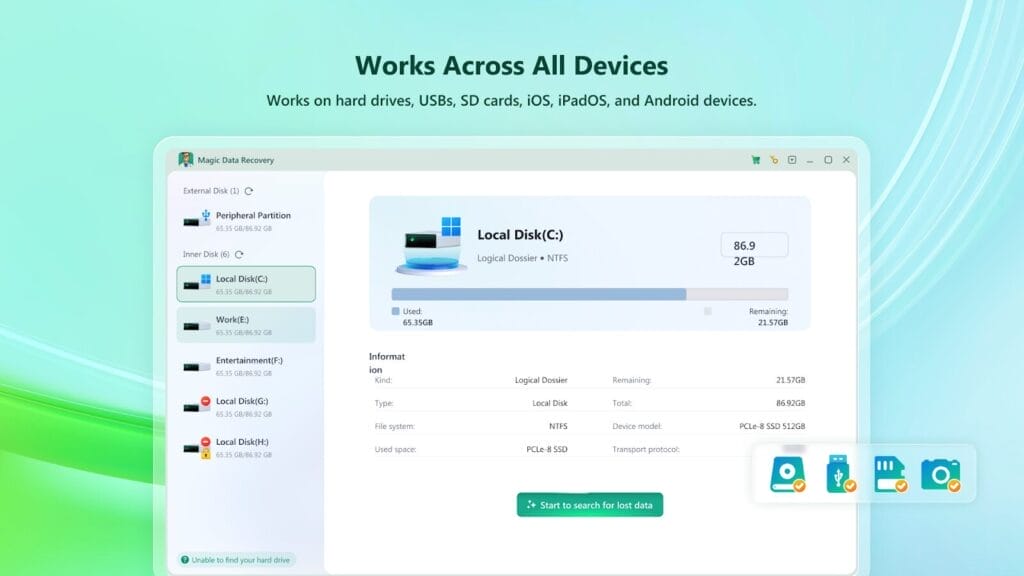
One of the most reliable and user-friendly tools is Magic Data Recovery, developed for a wide range of data recovery scenarios:
- Recovery after accidental formatting
- Repair of damaged or RAW partitions
- Support for deleted photos, videos, documents and emails
- File preview before saving
How to use Magic Data Recovery (example under Windows)
1. download and install securely
Download Magic Data Recovery to another drive and install it there.
This is how you prevent lost data from being overwritten.
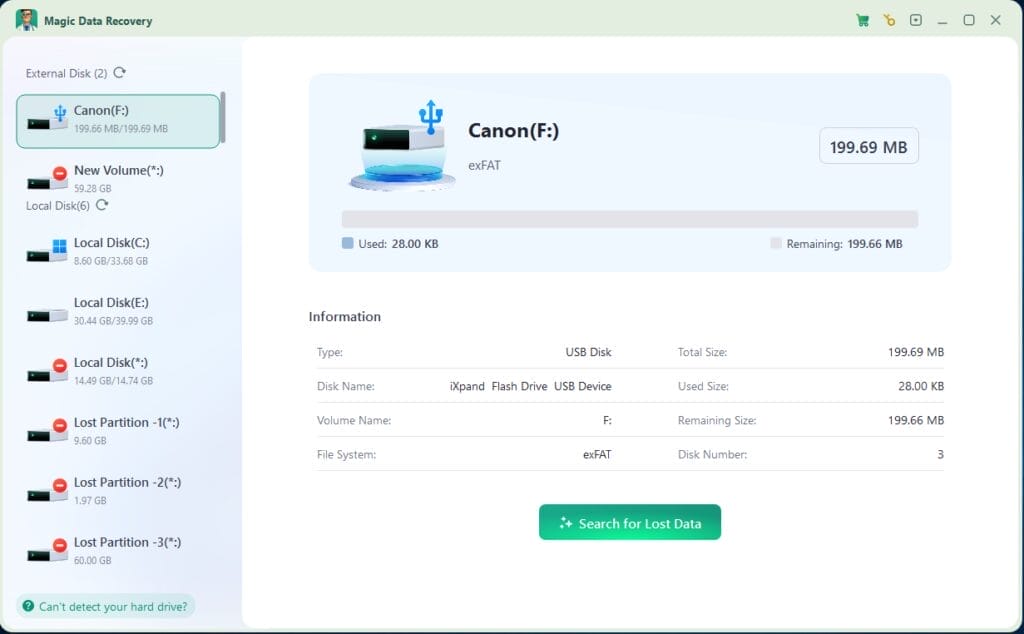
2. preview and selection
Start the software, select the hard disk with the lost data and click on "Search for lost data".
The program first performs a quick scan and then a deep scan.
3. preview and selection
After the scan, you can search the recoverable files.
With the preview function, photos and documents can be checked in advance.
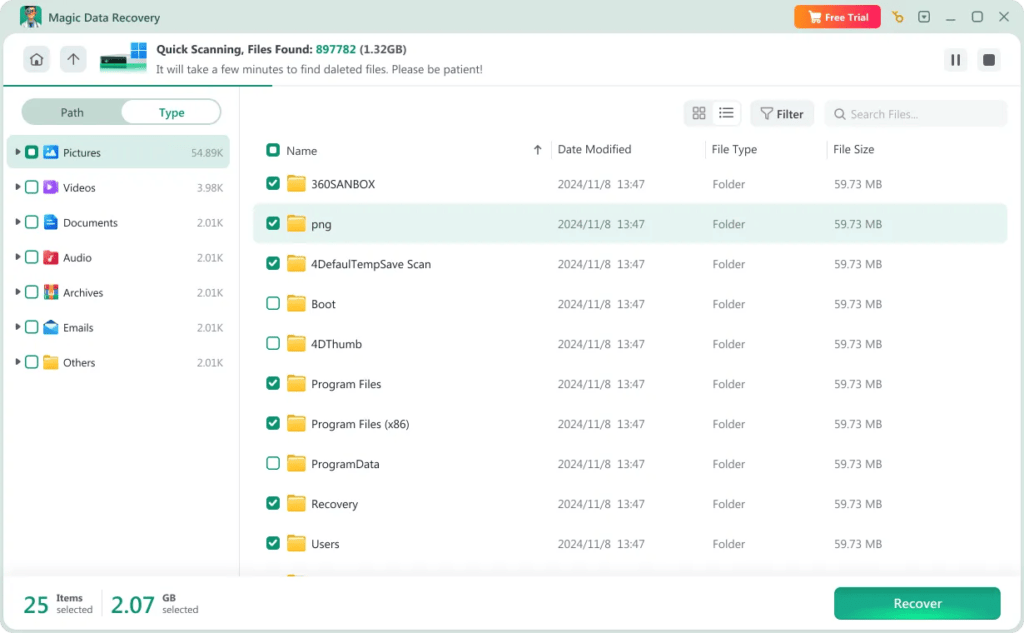
4. restore safely
Select the required files and save them on another healthy drive.
Do not save to the damaged hard disk!
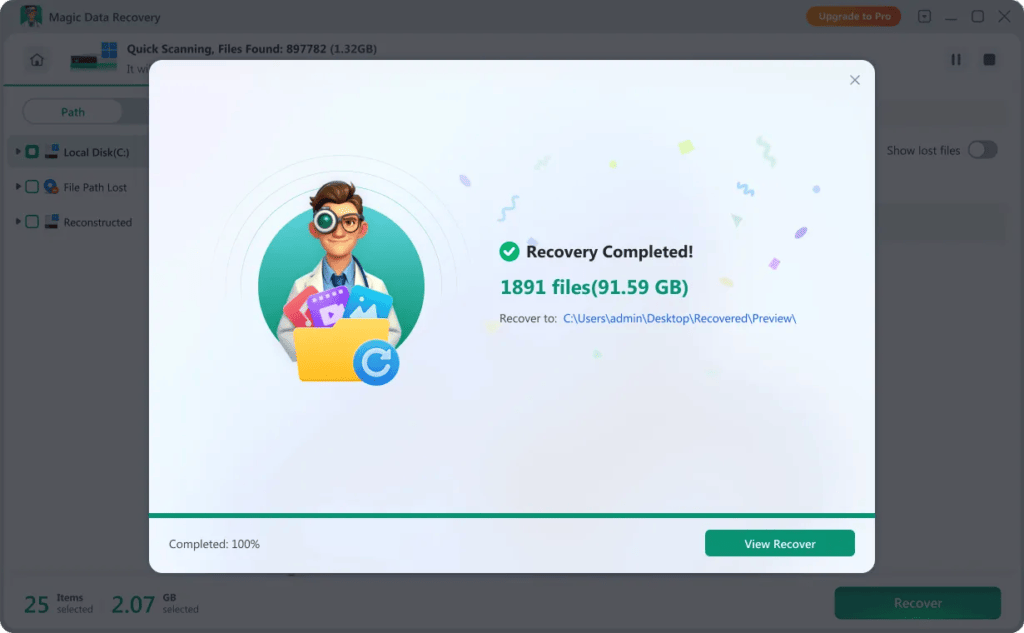
💡 Tip: With large drives, the deep scan can take several hours - do not interrupt the process.
Typical recovery scenarios
SD card or USB stick accidentally formatted
Many users lose photos or videos from cameras or smartphones.
With Magic Data Recovery, these files can be recovered quickly.
🔗 Learn more: Magic Data Recovery - Photo Recovery
Non-accessible or RAW hard disk
If Windows reports "The drive is not accessible" or "RAW",
There is often damage to the file system.
In such cases, a deep scan can recover the majority of the files.
NAS systems or external drives
Even with defective NAS or external hard disks, the data can
can be restored by connecting it to a PC with Magic Data Recovery.
Best practices after recovery
- Immediately create a backup of the restored files (cloud or external drive).
- Regularly monitor the hard disk status with SMART tools.
- Avoid frequent formatting and keep partitions neatly organized.
- Protect your system with reliable antivirus software.
Conclusion
Data loss can be stressful - but with the right tools, files can be recovered quickly and safely.
Magic Data Recovery from AmagicSoft supports a wide range of devices and scenarios and offers an intuitive user interface that is also suitable for beginners.
👉 Note: The key to successful data recovery is quick action - and not writing any new data to the damaged drive.

On Windows Tweaks you will find time-saving tech guides for PC, software & Microsoft. For a stress-free digital everyday life. Already We have been tweaking Windows since 1998 and just don't stop!